Customer
“I don’t recognize this charge.”
Chargeback Management
Look beyond individual disputes to understand patterns, prevention opportunities, and the payment setup behind them.
The goal: fewer avoidable chargebacks.
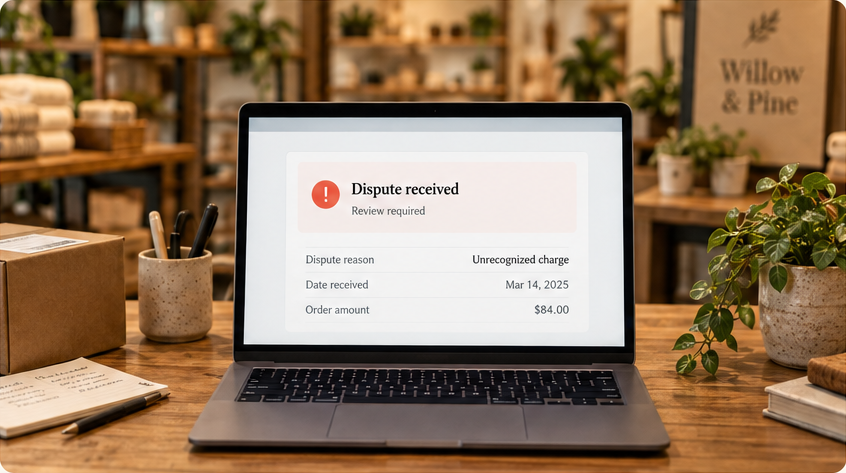
“I don’t recognize this charge.”
NORTHLINE COMMERCE
Unfamiliar billing name
Willow & Pine
The store they remember
A clue worth investigating:
Does the billing name match what customers recognize?
Illustrative scenario. A name mismatch is a possible contributor, not proof of the dispute’s cause.
Unauthorized use, account takeover, stolen credentials or other fraudulent activity.
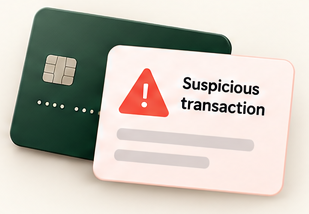
Descriptor recognition, recurring billing confusion, unexpected charges or unclear communication.
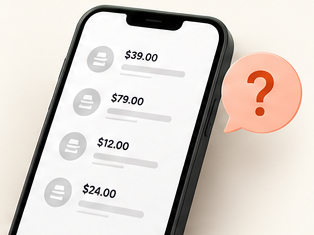
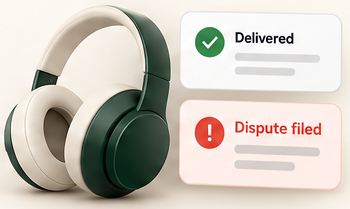
Product not received, service disputes, delivery problems or quality complaints.
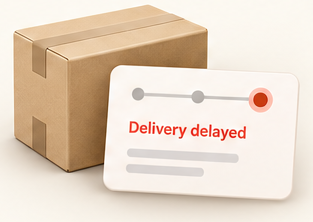
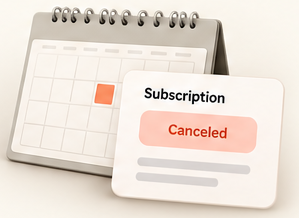
Refund timing, cancellation handling or recurring billing after a customer expects service to stop.
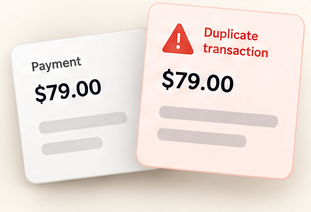
Duplicate transactions, incorrect amounts or other transaction-processing issues.
A legitimate transaction may still be disputed by the customer.
Start with the reason. Review the facts. Choose the response.
Illustrative categories for operational diagnosis—not definitive legal or card-network classifications. Delivery alone does not establish misuse.
Chargeback Prevention
Clear communication at every step can help reduce avoidable disputes.
01At checkout
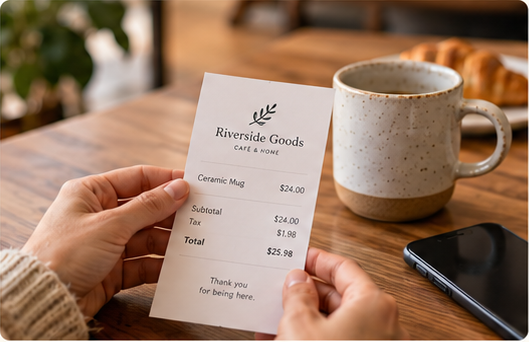
Recognizable billing names and clear receipts.

02After the purchase
Order confirmations, delivery updates and renewal notices.

03When something changes
Accessible support and clear cancellation or refund updates.
Not every chargeback can be prevented. Start with the parts of the customer experience you can improve.
Early Dispute Resolution
Early alerts and resolution tools may give you a chance to address an eligible dispute before it becomes a chargeback.
An opportunity to act. Not a guarantee.

Appropriate action may stop escalation.
Next steps depend on the facts and program.
Availability, coverage and eligibility vary by card network, issuer, processor, region and merchant setup.
Dispute Response
Review the facts, the effort involved and the business value before deciding how to respond.
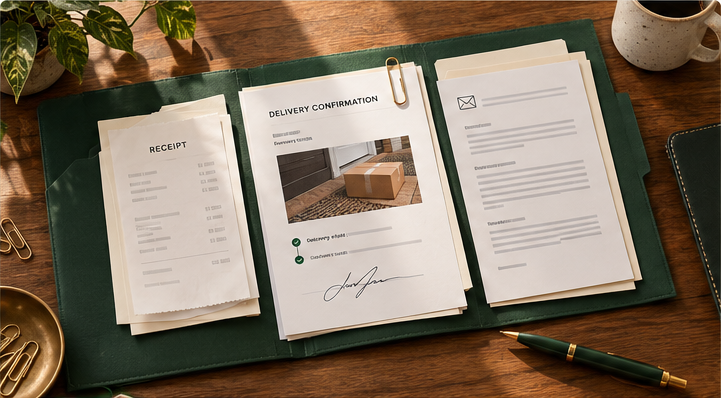
Stronger records

Gaps to review
Representment requires time, evidence and operational effort. Some disputes are worth challenging. Others may be better accepted.
Customer verification records
Retain relevant customer-verification records where appropriate. They can support your review but do not establish identity on their own.
Itemized invoices and receipts
Keep clear transaction amounts, dates and itemized records; review incomplete receipts or missing documentation.
Transaction entry method
Record whether the transaction was card-present or manually keyed and review the verification available for that transaction.
AVS, CVV and authentication
Retain available address-verification, security-code check and authentication results in accordance with applicable data-handling requirements. These signals can support evidence, not guarantee validity or success.
Delivery confirmations
Keep available signed delivery confirmations and delivery records. They can support a response but do not independently establish receipt or resolve every dispute.
Customer communication history
Retain relevant correspondence and support records; identify gaps in the customer history and request context.
Recognizable billing descriptors
Review how the charge appeared to the customer and keep the billing descriptor alongside the transaction record.
Fulfillment and service documentation
Gather relevant fulfillment or service records and identify missing information rather than treating documentation as definitive proof.
A prepared response process
Organize records and assess evidence quality before responding, rather than relying on a reactive case-by-case approach.
Match the response to the reason code, available evidence and applicable program requirements. Consider transaction value, operational cost and long-term risk before deciding whether to challenge or accept a dispute.
The response should follow the facts.
Good records can support a response. They do not guarantee a successful dispute outcome.
Understand the pattern
Look beyond individual cases to find where the customer experience may be breaking down.

Illustrative Example
What keeps showing up
I don’t recognize this charge.
Who is this company?
This billing name looks unfamiliar.
A repeated billing-name question is a clue worth investigating.
Where to look next
Compare the billing name with the store name, receipt and order confirmation.
Reporting should tell us where to investigate.
Illustrative examples only. Patterns suggest where to look; they do not establish the cause of a dispute.
Stay ahead of the warning
Keep an eye on payment activity before a processor notice demands your attention.

Illustrative trend
Review dispute activity alongside transaction volume and processor notices.
Watch changes over time.
Read dispute activity in context.
Review requests and deadlines.
Monitor before a warning becomes a business disruption.
Card networks, processors and acquirers monitor dispute activity.
High chargeback levels can lead to additional scrutiny, monitoring programs, reserves, fees or account restrictions depending on the merchant and payment environment.
Monitoring should begin before the merchant receives a warning.
Review chargeback counts and ratios in context with sales volume, refund behavior, alert activity, fraud trends and MID-level performance, alongside processor notices, requests and deadlines.
Balance approvals and risk
Approval strategy, fraud controls and chargebacks should be reviewed together.
Remaining after these example losses
$6,300
Remaining in this example
$8,000
Figures are simplified and hypothetical, shown for explanation only. They are not profit or customer results. Actual merchandise and fee treatment varies, and this example assumes each loss is separate.
Looser controls may admit more risky payments. Overly restrictive controls may block legitimate customers.
The objective is balanced payment performance.
Follow the customer journey
Review what happened before, during and after the transaction.
Illustrative journey
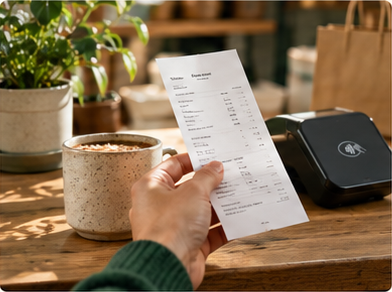
What was charged?

What was delivered?

What did the customer tell you?
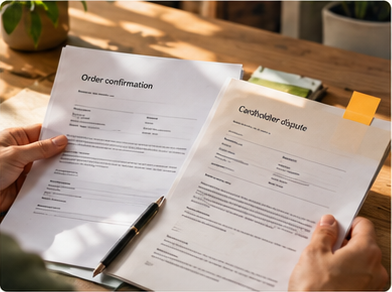
What happened next?
The dispute is one moment. The full story starts earlier.
Available analysis depends on the systems and records the merchant can provide.
Merchant Hub
In developmentWe’re building Merchant Hub to help merchants review dispute activity, compare payment accounts and see recurring issues more clearly.
Explore Merchant HubA preview of what we’re building.
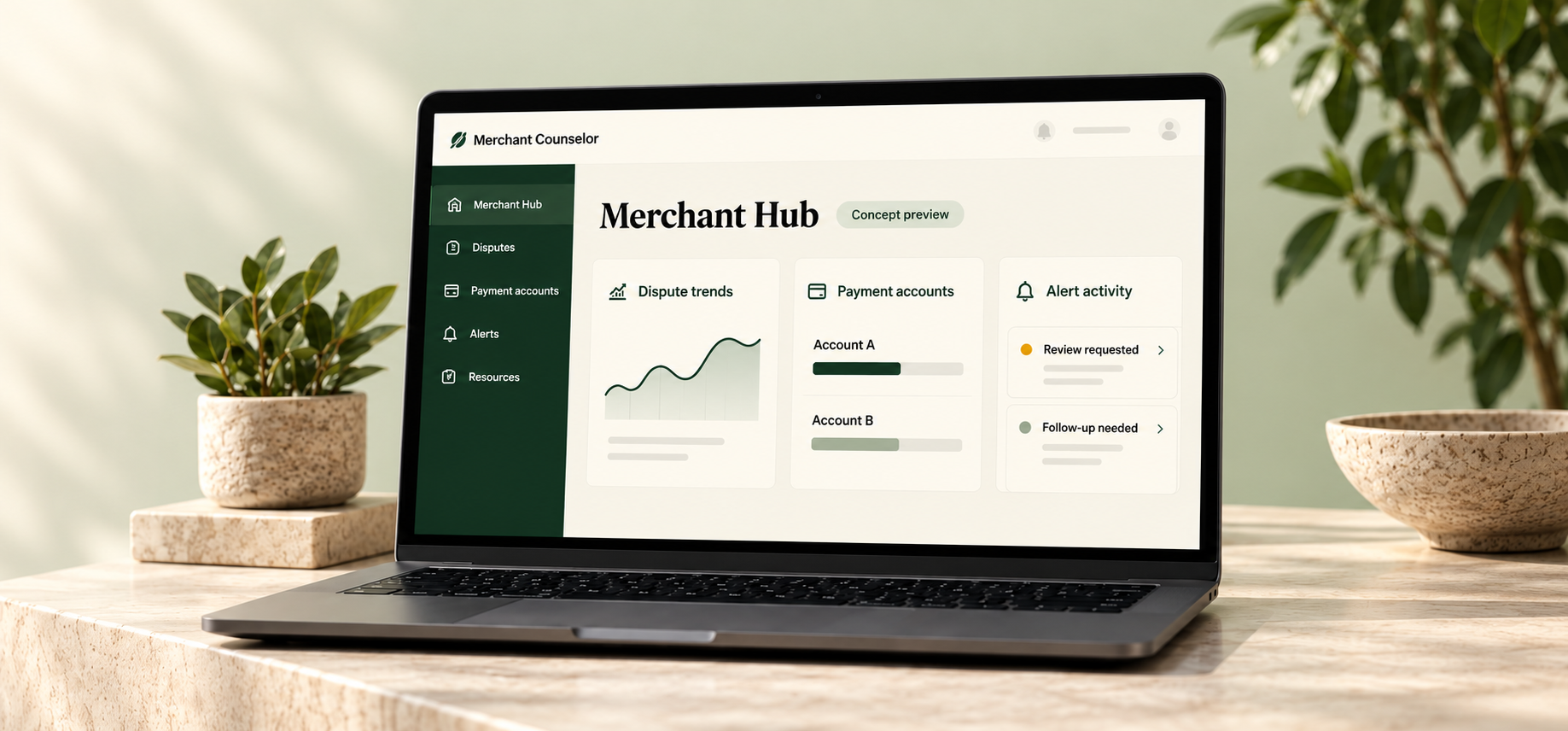
Spot recurring issues
Compare payment accounts
Review alert activity
Start with the pattern.
Tell us what you are seeing, how your business bills customers and what tools you use today. We'll help determine where the problem may be coming from.
Prevent what can be prevented. Understand the rest.