Fraud & Risk
Stop fraud. Keep good customers moving.
We help you evaluate fraud controls, reduce unnecessary friction, and protect legitimate sales.
More friction isn’t always more security.

Fraud controls do not operate in isolation.
A fraud decision can influence approval rates, customer friction and chargeback risk downstream.
- Fraud Rule
- Approval Rate
- Customer Friction
- Chargeback Risk
Fraud Controls & Revenue
Blocking fraud and blocking revenueare not the same thing.
Stricter rules can block legitimate sales. Looser rules can let more risk through.
Too loose
Suspicious payments can slip through.
Tuned to your business
Evaluate signals. Review uncertainty.
Too restrictive
Good customers can get caught, too.
Risk controls should be measured in context.
The right approach depends on your business model and transaction environment.
Conceptual illustration. Actual outcomes depend on your business and controls.
Fraud & Risk
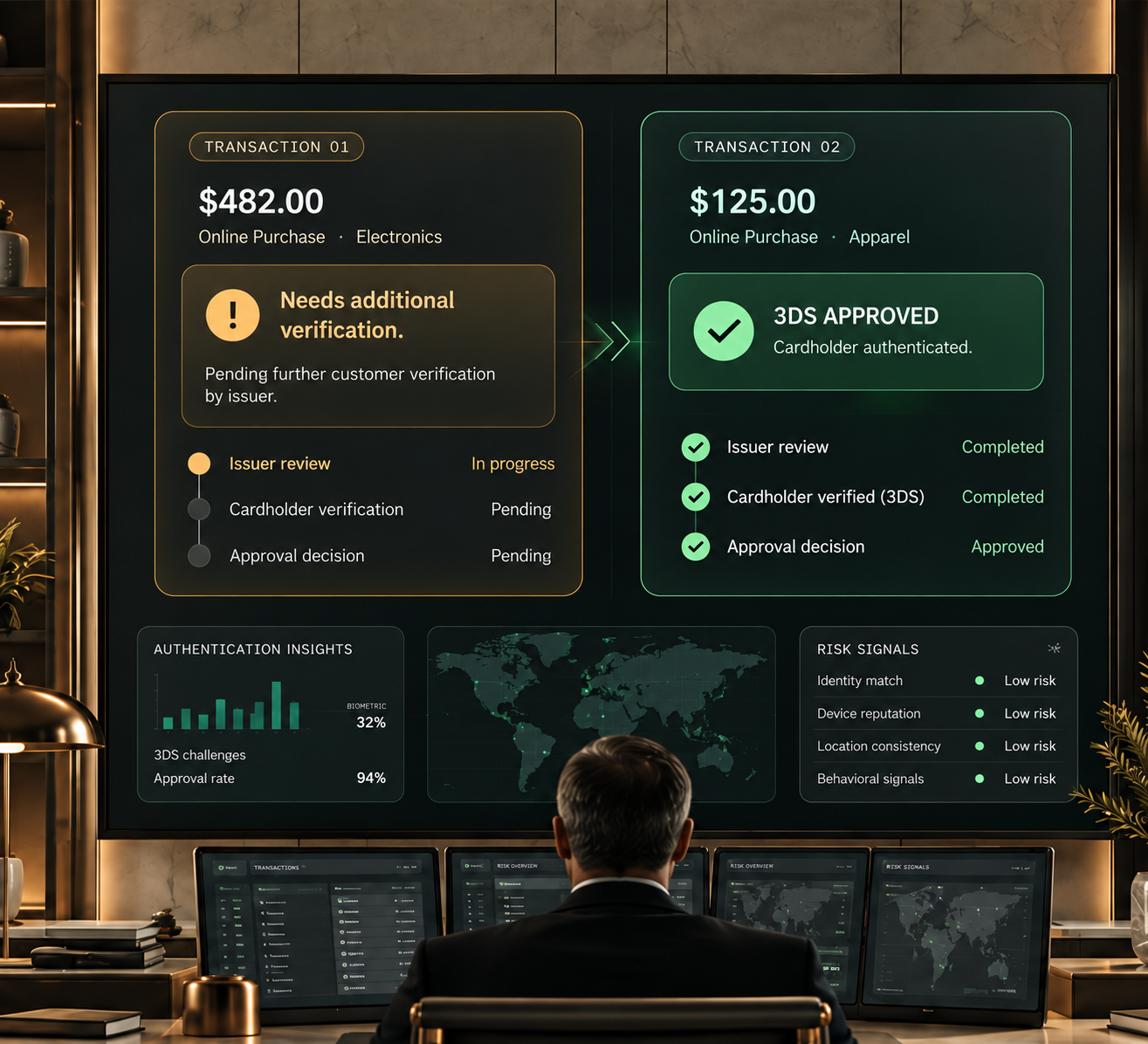
When the bank needs more confidence, 3-D Secure can help keep the transaction moving.
Many payment setups do not have 3-D Secure enabled by default. Some require additional setup or third-party support depending on your processor, gateway or acquirer.
When an issuer needs more cardholder verification, 3DS can help authenticate the customer electronically — supporting security, issuer confidence and approval performance.
The right authentication strategy can protect the transaction without treating every customer the same.
3DS behavior, availability and liability vary by network, issuer, processor, gateway, region and transaction type.
Keep your rules current
Your business changes. Your fraud rules should, too.
An old rule can start flagging good customers as buying patterns change.
- 01Then
The rule fits.
Your usual orders fit the original limit.
- 02Now
Orders grow. The rule stays.
Larger legitimate orders may get flagged.
- 03Review
Reassess with current data.
Review the signals before adjusting the rule.
For example: your average order value rises, but your old spending limit stays the same.
What we review
- Velocity rules
- Order-value thresholds
- Geography
- Device behavior
- AVS / CVV treatment
- Authentication
- Repeat attempts
Rules need context. And regular review.
Settings depend on your business model, product mix and transaction environment.
Illustrative example.
Fraud & Risk
Stopping fraud has a cost when legitimate customers are caught with it.
False declines can create lost revenue, customer frustration and unnecessary support activity.
Merchant Counselor helps businesses evaluate whether fraud controls may be contributing to authorization problems.
The goal is not fewer rules. It is better-aligned rules.
Explore Approval Rate Optimization →
Fraud & Risk
Fraud prevention and chargeback strategy should work together.
Some fraud becomes a chargeback.
Some chargebacks are not fraud at all.
Understanding the difference matters.
A dispute strategy should follow the root cause.
Explore Chargeback Management →Different signals. Different treatment.
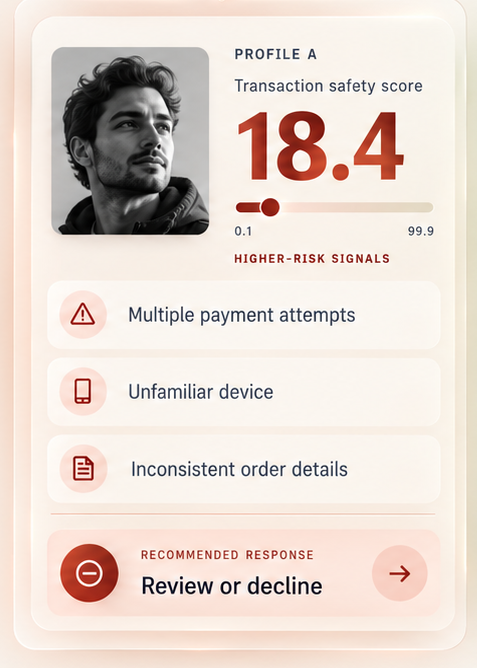
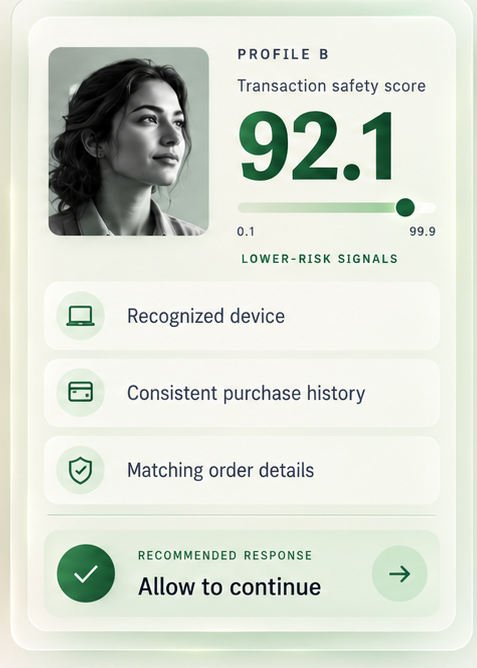
Illustrative scoring example • Higher score = lower risk
Treatment depends on merchant rules. A score does not guarantee an outcome.
Read the scoring example
This conceptual example, inspired by transaction risk scores such as Kount Omniscore, is not a product screenshot. Scores run from 0.1 to 99.9, and a higher score means lower risk. Scores evaluate transaction, device and purchase-history signals — not a person’s appearance.
- Profile A — score 18.4
- Higher-risk signals: multiple payment attempts, unfamiliar device, inconsistent order details.
- Illustrative response: review or decline.
- Profile B — score 92.1
- Lower-risk signals: recognized device, consistent purchase history, matching order details.
- Illustrative response: allow to continue.
Treatment depends on merchant rules. A score does not guarantee an outcome.
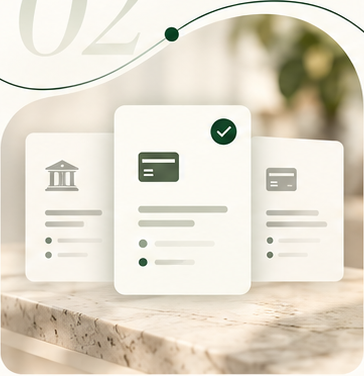
How Merchant Counselor helps.

Assess
Review the merchant's payment flow, fraud tools, rules, authentication, authorization data and chargeback activity.
Advise
Identify areas where fraud controls may be too restrictive, too permissive or misaligned with the business.
Implement
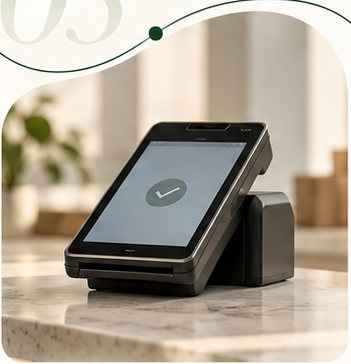
Help coordinate approved changes with gateways, processors, fraud providers or other platforms.

Optimize
Measure outcomes and continue adjusting the risk strategy as fraud patterns and transaction behavior change.
Not sure whether you have a fraud problem or a fraud-control problem?
Tell us what you are seeing — blocked customers, high chargebacks, suspicious transactions, too many declines or something else.
We'll help determine where to investigate.
Protect the business without creating unnecessary friction.