01
Simple

For straightforward payment needs.
- One processor
- One merchant account
- One gateway
Payment Architecture
We review how your payment providers, systems, and tools work together—and where the connections create friction.
We look at the payment environment as a system.

Follow the transaction
A checkout issue can begin several systems away. Trace the connections to understand where friction starts.
Customer experience
Customer
Website / App / POS
Checkout
Payment infrastructure
Gateway / Payment Layer
Routing / Orchestration
Merchant Account / MID
Banking & network
Processor / Acquirer
Card Network
Issuer
Follow the transaction. Find the friction.
Where it appears
The customer sees the interruption at the point of payment.
Where we investigate
Review the response and connected systems before choosing what to change.
Illustrative transaction path—not a diagnosis. Actual configurations vary.
Built around your business
Different needs call for different levels of complexity.
01
For straightforward payment needs.
02

For expanding channels and billing needs.
03

For specialized routing, risk, and resilience.
Single processor. Single merchant account. Single gateway. Appropriate when the business has straightforward payment needs.
Multiple channels, recurring billing, fraud tools and additional merchant accounts. Complexity increases as channels, billing models and reporting needs expand.
Multiple processors, multiple MIDs, routing, orchestration, international markets, specialized risk requirements and redundancy. Justified when scale, risk or operational requirements demand it.
More infrastructure is only useful when it solves a real business problem.
Illustrative setups. The right configuration depends on your business.
Designed to solve something
Start with the business problem. Then review the payment setup behind it.
01 / Outages
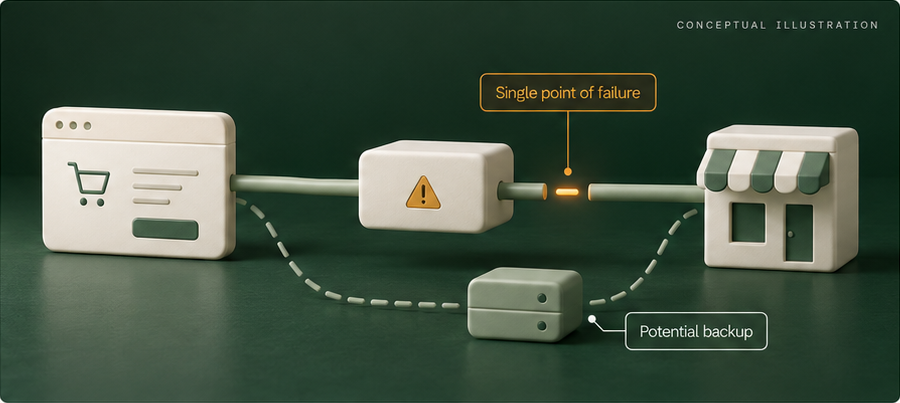
One ecommerce store relies on a single gateway and merchant account. A processor or gateway outage can stop checkout.
Whether a compatible backup payment path or secondary provider makes sense for critical traffic. Availability depends on approved relationships and technical compatibility; failover is not guaranteed.
02 / Approval differences

A subscription merchant sees stronger rebill approval performance on one processor than another, even with the same customer base.
Merchant-account setup, processor differences, routing logic, and transaction type by channel. Review the differences before considering a change; approval improvement is not guaranteed.
03 / Recurring billing

A business wants to move providers, but recurring subscribers depend on stored credentials, token portability, and account updater support.
Tokens, updater services, billing logic, and merchant-account structure before making changes. Stored credentials may not be portable; provider cooperation, contracts, and technical compatibility matter.
04 / Specialized businesses

A high-risk or specialized merchant may need a setup that matches underwriting expectations, fraud controls, and processor capabilities from the start.
How the architecture aligns with processor capabilities, underwriting, and operational requirements. Any proposed setup remains subject to provider approval.
05 / Multiple brands

A merchant operates multiple brands or websites, but merchant accounts and checkout flows are not clearly aligned with those business entities.
How merchant accounts, routing, and payment flows match the correct brands, websites, and entities, within processor and underwriting requirements.
06 / Reporting

The merchant sees deposits, but lacks detail across gateway fees, decline patterns, routing behavior, or processor reporting.
Exports, reporting, and unified analytics that could make the payment environment easier to understand as a system, based on available source data.
The right structure for the business
Some businesses benefit from separate accounts. Others benefit from keeping things simple.
Straightforward needs

One merchant account
A simple setup can suit a single-location business with straightforward payment needs.
More demanding operations

Multiple accounts, when justified
Separate accounts may help with operational separation, processor diversity, or resilience.
Backup paths depend on compatibility and provider approval.
For some businesses, separate merchant accounts may support operational separation, additional capacity, processor diversity, or clearer performance analysis. For others, they add unnecessary complexity. Online selling or volume alone does not require extra accounts.
Account structure must follow processor, acquirer, card-network, and underwriting requirements.
Redundancy should solve a meaningful risk—not create complexity for its own sake.
Illustrative business examples.
Routing with a purpose
Orchestration applies business rules to eligible payment paths. The right setup depends on your operations and provider relationships.
Illustrative example
Transaction
Routing rule
Recurring payment
Use the configured eligible MID
Check eligibility and availability
Processor destinations
Configured recurring MID
Other eligible path
Other eligible path
This example sends a recurring payment to its configured eligible account.
Route: Subscription payment → Recurring payment → Processor A · Configured recurring MID.
Payment orchestration can give larger or more complex merchants greater control over where eligible transactions are sent. That control may support resilience, processor flexibility, performance analysis or operational requirements.
Routing should be driven by legitimate business and payment-performance objectives. Alternative paths depend on eligibility, compatibility and provider approval; routing does not guarantee approvals or uninterrupted service.
Routing should serve a clear business objective.
Explore Payment OrchestrationIllustrative routing only. Eligibility, compatibility, and provider approvals determine available paths.
Stored payments. Future flexibility.
Stored credentials keep subscription businesses running. How they are held can affect your options when changing providers.

Illustrative business
A coffee subscription brand
Recurring orders. Stored payment credentials. A possible provider change.
Provider dependency

Changing providers may be harder when credentials and billing depend on one provider’s systems.
Transfer planning

Review export options, provider cooperation, and compatibility before committing to a switch.
Token exports and migrations are not always available. Feasibility depends on providers, contracts, technical compatibility, and compliance requirements.
Architecture decisions made today can affect flexibility later.
Plan for the interruption
A resilient setup considers where a single failure could interrupt payments—and whether another eligible path can be prepared.
A single interruption can stop the payment path.

Another eligible path may provide an option.
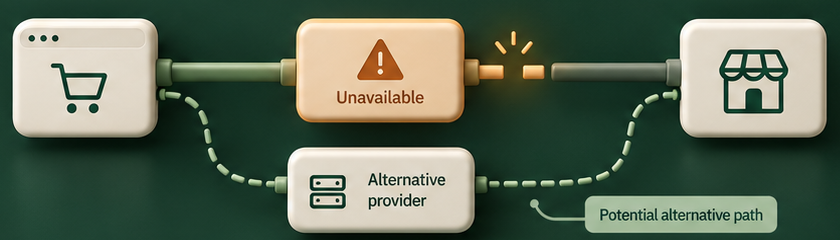
Conceptual illustration
Scroll each illustration to see the complete path.
Processor or gateway outages, network problems, configuration errors, and account restrictions can create operational risk.
Redundancy does not eliminate risk. It can give the business another path when something fails.
Options depend on integrations, underwriting, contracts, and technology. No architecture guarantees uninterrupted processing or automatic failover.
SEE THE WHOLE TRANSACTION
Routing, fraud controls, authentication, and billing can affect more than the approval decision.

ILLUSTRATIVE ORDER
Returning customer · Stored card · Online
May decrease
With stricter fraud rules
Some legitimate payments may be declined.
Exposure may decrease
Customer friction may increase
Stronger screening can add checks or customer steps.
Still needs review
Product, customer history, fulfillment, and dispute reasons still matter.
WHAT CHANGES WHEN…
Possible effects depend on the customer, rule configuration, and transaction.
A change designed to solve one problem can create another somewhere else.
Illustrative trade-offs. Review actual results across the payment environment.
The payment stack affects more than whether a transaction reaches the processor. Routing, fraud controls, authentication, billing logic, and merchant-account structure can influence approvals, customer friction, and disputes; review these connected considerations together.
TEST BEFORE YOU COMMIT
When technically and contractually possible, start with a controlled pilot and compare the results before expanding.
Eligible transactions are allocated to one of two parallel paths: main traffic stays in the current environment, while a limited eligible pilot group uses the test environment. A transaction is not sent to both. Evidence from each environment is compared separately before deciding whether to expand, adjust, or revert.
Transactions that meet your pilot criteria.
MAIN TRAFFIC
Existing setup continues.
LIMITED PILOT
New architecture under review.
COMPARE THE EVIDENCE
The em dashes are placeholders for measured results, not actual values. No results or advantage are implied for either environment.
| Metric | Current | Pilot |
|---|---|---|
| Approval rate | — | — |
| Cost | — | — |
| Reliability | — | — |
| Chargebacks | — | — |
DECIDE FROM THE RESULTS
Choose the next step based on the evidence.
ILLUSTRATIVE CONTROLLED PILOT
Maintain a clear view of the current setup.
Choose an appropriate eligible pilot group.
Assess cost, reliability, approvals, and disputes.
Change should be based on evidence.
Controlled testing depends on technology, processor cooperation, integrations, contracts, and underwriting. It is not always possible.
Merchant Hub — Being Built
Merchant Hub is being built to compare performance across processors, merchant accounts, routing paths, costs and other parts of the payment environment.
Explore Merchant Hub →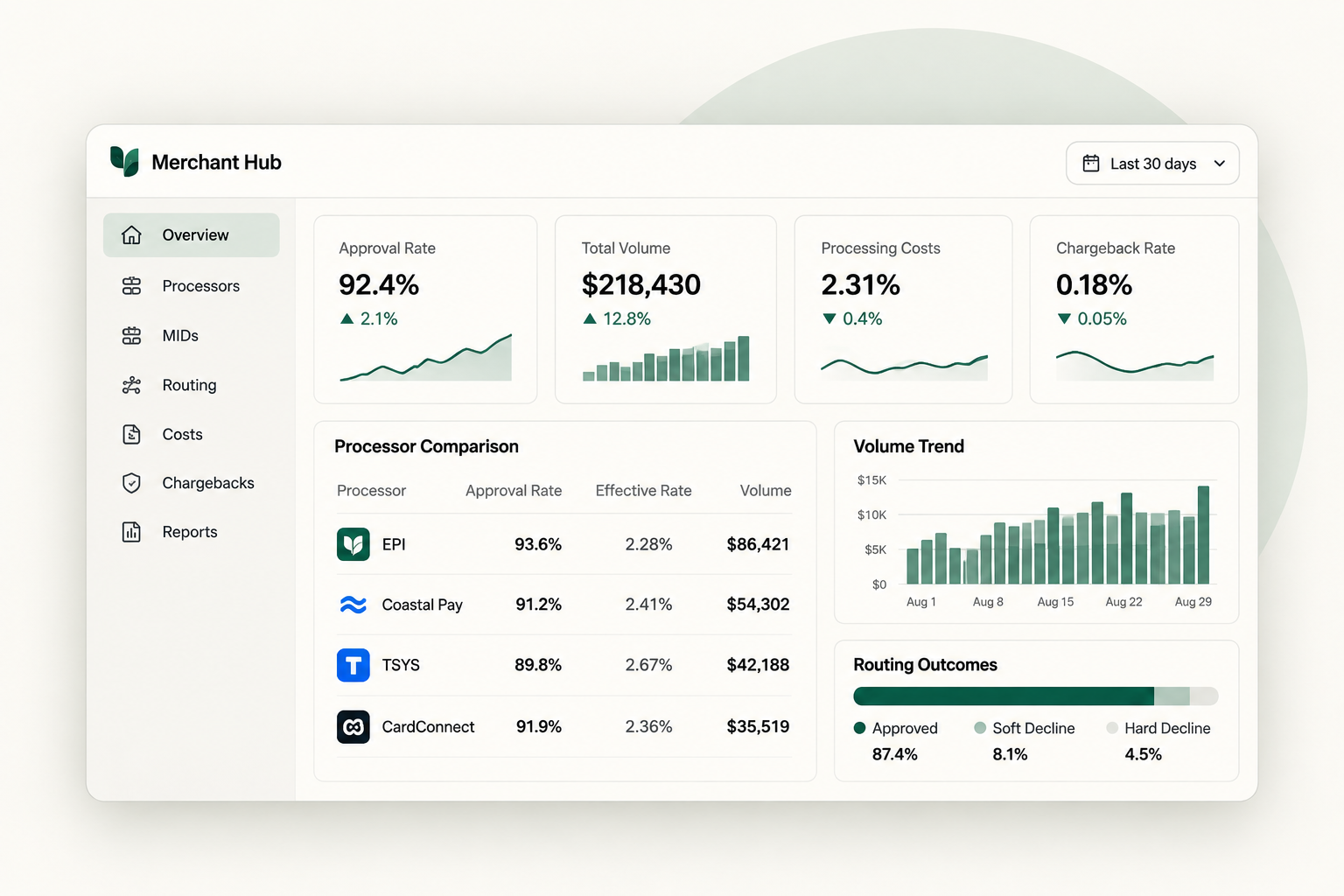

Map the current payment stack, providers, merchant accounts, integrations, transaction flow and pain points.
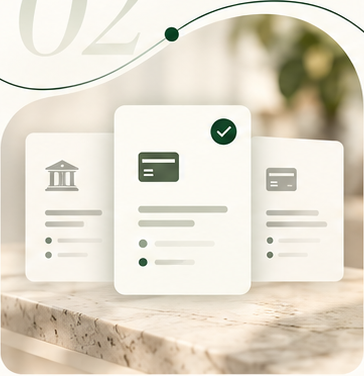
Identify architectural weaknesses, unnecessary complexity and areas where different structures may make sense.
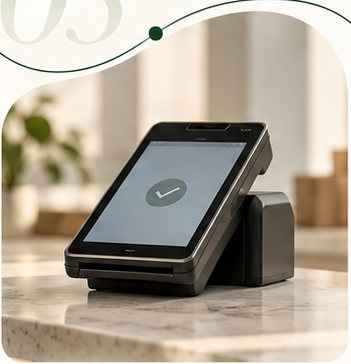
Help coordinate processors, gateways, platforms and technical partners when approved changes are made.
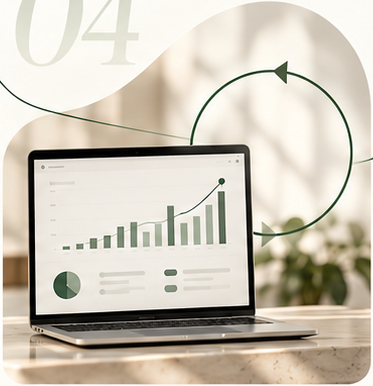
Measure performance and continue evaluating the architecture as the business grows.
Tell us how payments move through your business today.
We'll help map the environment, identify where the complexity is coming from and determine whether anything should change.
Understand the system before changing the pieces.